
When planning a home renovation or selecting new flooring and furniture, the choice between solid wood and engineered wood represents one of the most critical decisions you will face. Both materials offer the unmistakable warmth and aesthetic appeal of natural wood, yet they differ significantly in construction, performance, and long-term financial value.
Choosing the right option requires looking beyond the initial price tag. You must evaluate how installation complexities, maintenance requirements, environmental conditions, and long-term durability impact your total investment. A detailed breakdown of these two materials will help you determine which option delivers the maximum value for your specific budget.
Understanding the Core Differences
To evaluate the financial implications of each material, it is important to first understand exactly what you are paying for.
Solid wood consists entirely of homogenous planks or sections cut directly from a single tree trunk. There are no composite layers, synthetic glues, or alternative materials hidden inside. The species of wood you choose, whether it is a domestic hardwood like oak and maple or an exotic variety like Brazilian cherry, dictates the strength, color variation, and grain pattern of the entire piece.
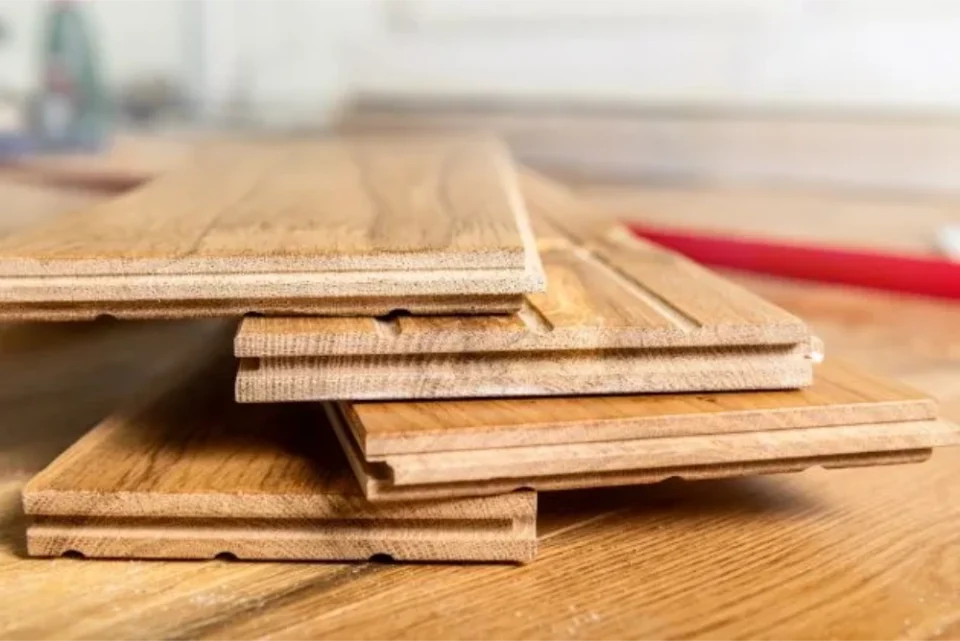
Engineered wood is a composite material designed to maximize stability while utilizing natural timber more efficiently. It features a structural design consisting of a relatively thin top layer of authentic hardwood, known as the wear layer or veneer, permanently bonded to a thick core. This underlying core is constructed from multiple layers of cross-ply plywood, high-density fiberboard, or blockboard. The grain of each internal layer runs perpendicular to the one above it, creating a lattice-like grid that prevents the material from moving naturally.
Upfront Material and Purchasing Costs
When analyzing immediate, out-of-pocket expenses for the materials alone, engineered wood generally provides a lower barrier to entry, though pricing structures for both categories can overlap significantly based on quality indicators.
Solid hardwood represents a premium commodity. The price reflects the cost of harvesting, milling, and drying raw lumber. Thicker planks, wider boards, and rare tree species command the highest prices. Additionally, high-grade options with minimal natural defects or knots carry a steep financial premium. Because you are purchasing solid timber through the entire thickness of the product, fluctuations in Global lumber markets directly impact retail pricing.
Engineered wood reduces upfront material costs by using less expensive, fast-growing softwoods or composite fibers for the structural core, reserving the costly premium hardwood solely for the visible top wear layer. However, high-end engineered wood options can equal or surpass the cost of standard solid wood. Premium engineered variations feature exceptionally thick wear layers, marine-grade plywood cores, and specialized artistic finishes that drive up production costs.
If you are working with a strict baseline budget, entry-level engineered products offer a highly accessible path to achieving an authentic wood aesthetic. However, if you find yourself comparing high-grade engineered options against standard domestic solid hardwoods, the immediate material cost difference often becomes negligible.
Installation Costs and Complexity
The total cost of your investment depends heavily on the labor and preparation required to complete the installation. This is an area where engineered wood often secures a distinct financial advantage.
Solid wood requires specific, rigid installation techniques. It must be nailed or stapled down to a wood subfloor. It cannot be installed directly over a concrete slab without building an expensive plywood subfloor system first. Furthermore, solid wood planks must acclimate to the ambient humidity of your home for several days before installation to prevent post-installation buckling or splitting. This extends project timelines and increases professional labor fees.
Engineered wood offers superior structural versatility, which translates directly into lower installation costs. Its cross-ply core resists expanding and contracting, allowing it to be installed using several methods:
-
Floating Installation: The planks click or glue together at the seams and rest on top of a thin underlayment pad, requiring no mechanical fasteners to the subfloor.
-
Direct Glue-Down: The material can be adhered directly onto concrete slabs, making it suitable for basements and condominiums.
-
Staple or Nail-Down: It can still be fastened to traditional plywood subfloors if preferred.
The floating method makes engineered wood a highly attractive option for experienced do-it-yourself enthusiasts. By handling the installation yourself, you can eliminate professional labor costs entirely. Even if you choose to hire professionals, the speed and ease of installing engineered wood generally result in lower labor estimates compared to solid wood projects.
Environmental Suitability and Performance Deficits
Choosing a material that is poorly suited for your home’s environment can cause premature failure, forcing you to pay for expensive repairs or complete replacements.
Solid wood is highly hygroscopic, meaning it acts like a sponge by continuously absorbing and releasing airborne moisture. During humid summer months, solid wood planks swell. In dry winter months, they shrink. This cyclical movement leads to gaps, cupping, and crowning over time. Consequently, solid wood is completely unsuitable for high-moisture environments, such as basements, full bathrooms, or geographic regions with extreme seasonal humidity swings.
Engineered wood is explicitly manufactured to neutralize this dimensional movement. The perpendicular orientation of the internal core layers locks the material in place, preventing individual planks from expanding or contracting significantly when humidity levels shift. This structural resilience allows engineered wood to perform reliably in areas where solid wood would fail, including finished basements, radiant floor heating systems, and humid coastal climates. Selecting engineered wood for these challenging spaces protects your budget from moisture-related damage.
Lifespan, Refinishing, and Long-Term Value
While engineered wood often wins the short-term budget battle, solid wood remains the clear winner when evaluating long-term financial returns across decades.
The true value of solid wood lies in its incredible longevity. Because a solid plank consists of authentic hardwood throughout its entire thickness, it can be sanded down and completely refinished up to seven or eight times over its lifespan. If your floor incurs deep scratches, dents, or water stains, a professional refinishing crew can sand away the damage and apply a fresh topcoat, making the wood look brand new. A properly maintained solid wood floor can easily last over a century, meaning you will likely never need to budget for a replacement floor as long as you own the home.
Engineered wood has a finite lifespan dictated entirely by the thickness of its top wear layer.
-
Thin Wear Layers (1mm to 2mm): Cannot be safely sanded at all without risking tearing through to the plywood core beneath. These products must be completely replaced if the surface becomes severely worn or damaged.
-
Thick Wear Layers (4mm to 6mm): Can be sanded and refinished two to three times over their lifespan.
Consequently, engineered wood surfaces generally last between twenty and forty years depending on the product grade and foot traffic. From a long-term budgeting perspective, solid wood acts as a permanent asset that appreciates with the property, whereas engineered wood is a depreciating asset that will eventually require replacement.
Frequently Asked Questions
Does solid wood furniture hold its resale value better than engineered wood furniture?
Yes. Solid wood furniture routinely commands higher prices on the secondary market and at auctions because it can be repaired, stripped, stained, and completely restored by future owners. Engineered wood furniture, particularly items built with particleboard or medium-density fiberboard cores, tends to degrade when disassembled or moved frequently, resulting in minimal resale value.
Can you use traditional steam mops on engineered wood surfaces?
No. You should never use steam mops on engineered wood surfaces. The high pressure and intense heat generated by steam mops can force moisture deep between the layers of the material. This moisture breaks down the structural adhesives holding the core together, leading to irreversible delamination and warping.
How does the acoustic profile of solid wood compare to engineered wood flooring?
Solid wood flooring yields a deeper, more solid sound underfoot because it is mechanically fastened directly to the subfloor structure. Floating engineered wood floors can sometimes produce a hollow, clicking sound when walked on. This acoustic issue can be effectively minimized by investing in a premium, sound-dampening underlayment during installation.
Is engineered wood more resistant to surface scratching from pets than solid wood?
Scratch resistance depends entirely on the hardness of the top wood species and the quality of the protective finish coat, not the internal construction of the plank. An engineered plank with a hickory veneer and an aluminum oxide factory finish will resist scratches much better than a solid pine plank finished with a standard oil-based polyurethane.
Can radiant floor heating systems be used safely under solid wood planks?
It is generally discouraged. The direct heat generated by radiant flooring systems dries out solid wood rapidly, accelerating thermal contraction and causing planks to gap, crack, or warp. Engineered wood is the industry standard recommendation for radiant heating systems because its stable core tolerates temperature fluctuations without distorting.
What is the minimum wear layer thickness required for engineered wood to be sanded safely?
An engineered wood product should have a minimum wear layer thickness of 3 millimeters to withstand a standard professional sanding and refinishing cycle. Any wear layer thinner than 3 millimeters runs a high risk of being sanded away entirely, which ruins the floor and exposes the underlying plywood core.
